3D food printer — does it exist? Myth vs reality
"3D food printer" is a term often confused with inkjet edible printing. This article explains the differences and which solution actually works for confectionery.
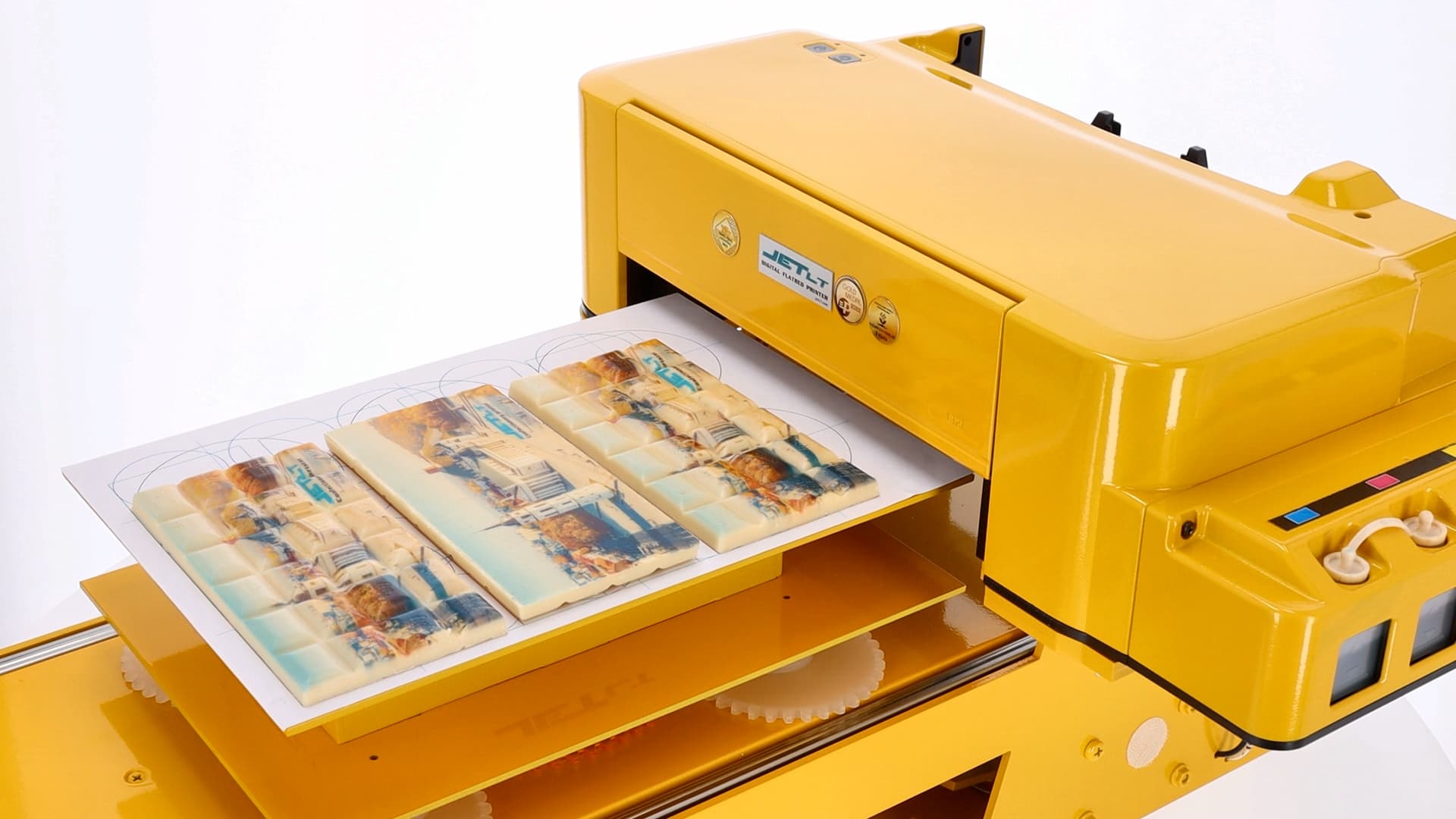
The term "3D food printer" appears often online — people search for a way to personalize cakes, chocolate or sugar paste. But real 3D food printers and inkjet edible printers work in completely different ways. This article explains what actually works for confectionery and why.
What is a 3D food printer?
True 3D food printers use extrusion technology — they build products layer by layer from dough, chocolate or sugar paste. It is similar to industrial 3D printing, just with edible "ink". The technology is mainly used for prototypes, decorative elements and labs. For mass confectionery production it is too slow and expensive.
What is an inkjet food printer?
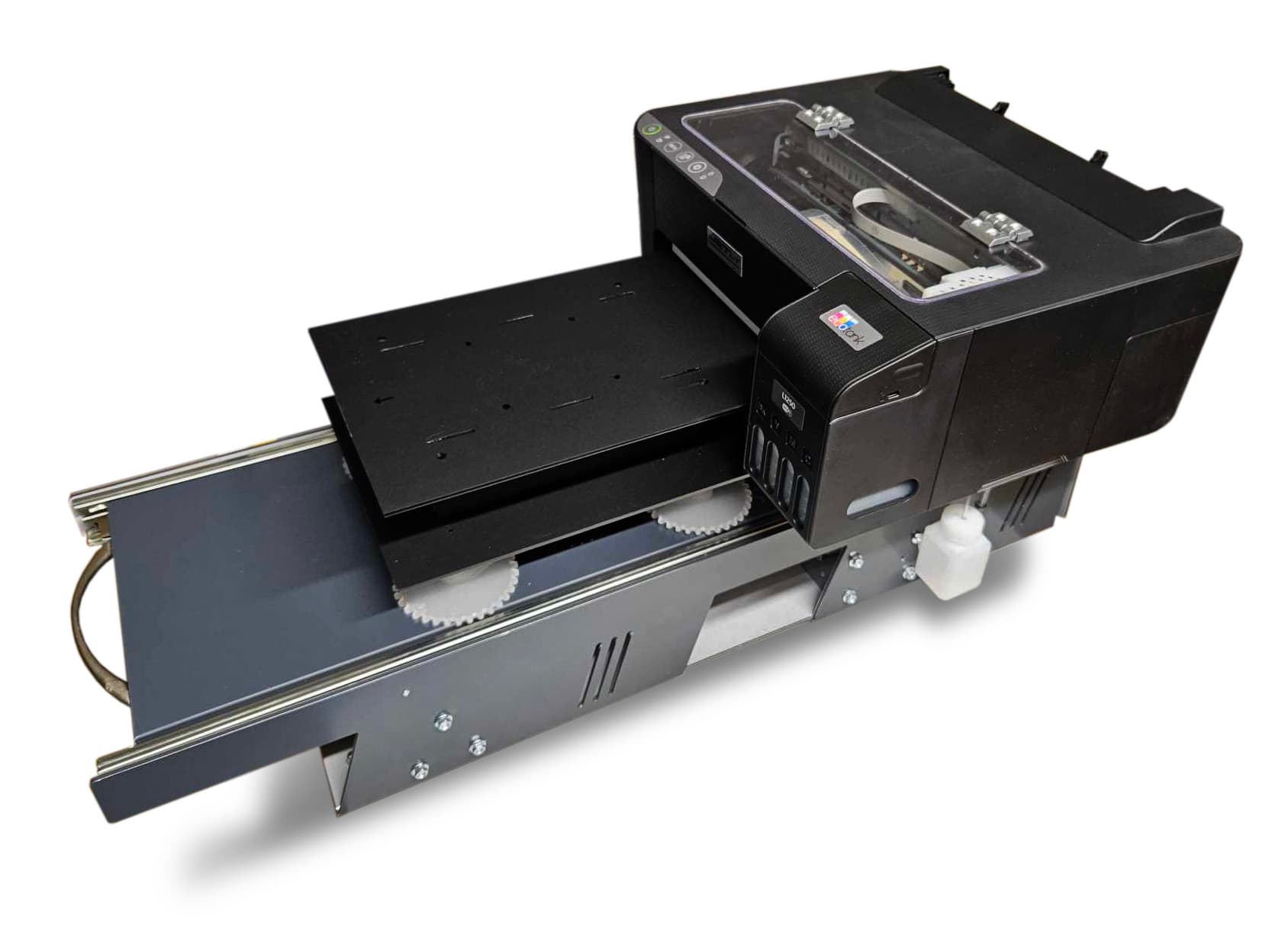
An inkjet food printer (exactly what JetLT makes) uses edible CMYK inks to print on smooth surfaces — wafer paper, sugar sheets, chocolate, glazes. It is 2D printing, but the result is edible, vivid, and produced in large volumes (up to 200 pcs/hour).
Which one works for confectionery?
Practically all professional confectionery — cakes, cookies, gingerbread, chocolate — uses inkjet, not 3D. Reasons:
- Speed — up to 200 prints per hour vs. minutes for a single 3D model.
- Cost per print — from €0.02 with inkjet.
- Photo and logo accuracy — inkjet reaches 300 DPI resolution.
- Safety — certified CMYK inks meeting EU standards.
Is JetLT a 3D printer?
No. JetLT specializes in inkjet edible printing — the right fit for the confectionery industry. Our food printer lineup covers 8 models for different surfaces: cakes, cookies, gingerbread, macarons, chocolate, sugar paste, paper packaging and a universal model.
How else do inkjet and 3D differ?
- Inkjet — EU-certified CMYK inks; 3D — often experimental dough or pastes.
- Inkjet — simple integration with Photoshop/AcroRip; 3D — requires 3D modelling software.
- Inkjet — usable by any confectioner without special training; 3D requires technical training.
How much does an inkjet food printer cost?
The JetLT inkjet food printer starts at €1,600. The package includes the printer itself, certified inks, initial training and a 12-month warranty. Want advice on which model is right for you? Get in touch.
Related articles: Which food printer to choose • How to print on cakes • How to personalize chocolate
Related products
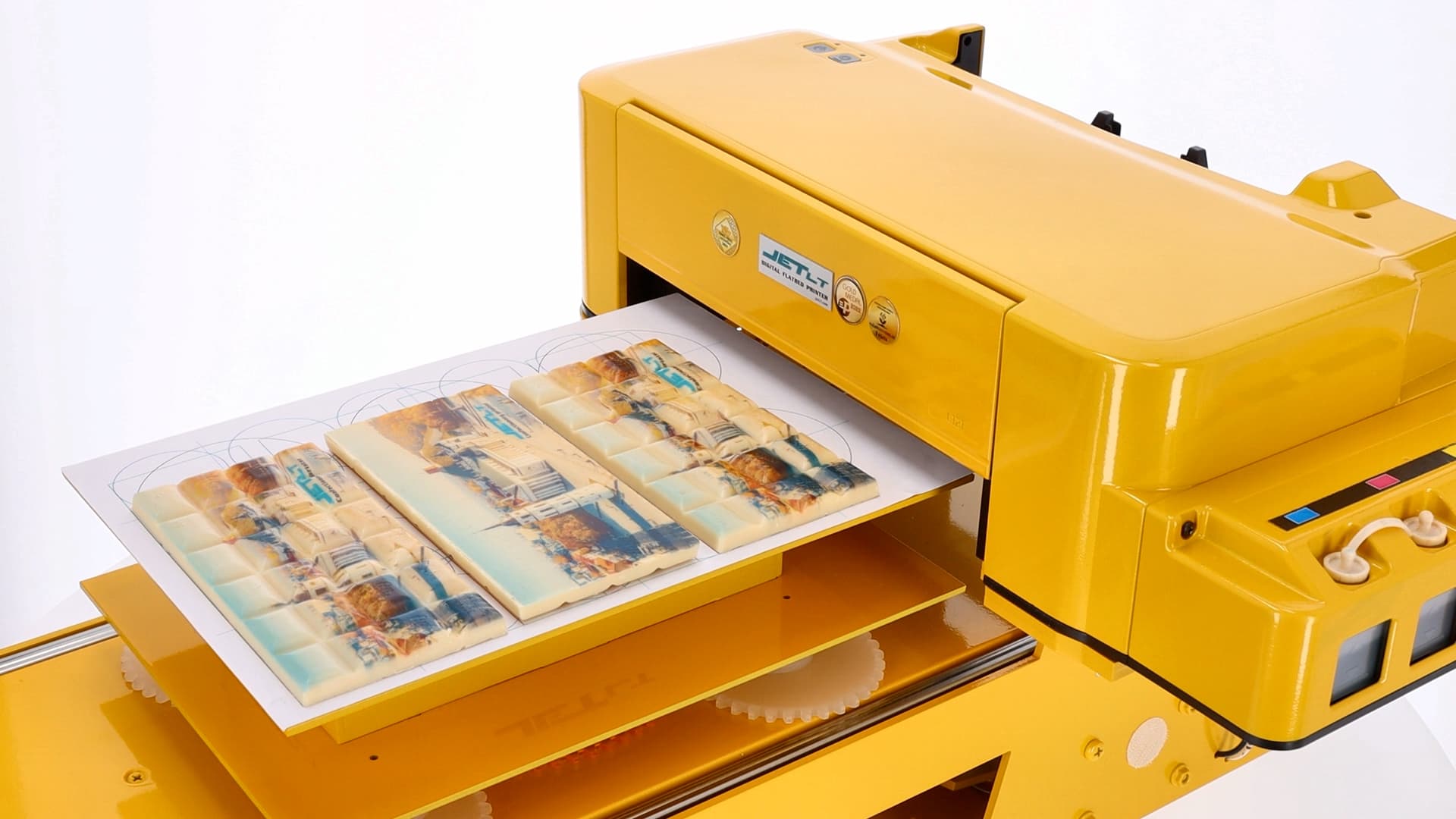
Chocolate Printer
Turn chocolate into a premium product — the JetLT printer lets you print a logo, photo or design on any type of chocolate with professional precision and vivid colours.
View productReady to start printing yourself?
JetLT food printer — from €1,600. 12-month warranty and initial training included.
Blog
Sugar sheets vs wafer paper — which to choose for your bakery?
Sugar sheets and wafer paper are the two most common edible print substrates, but their properties differ. We compare them for cakes, cookies, chocolate and storage.
Confectionery printer vs food printer — is it the same device?
„Confectionery printer" and „food printer" — both terms surface side by side in Google. Are they synonyms? When should you use which? We clarify the terminology and help you choose the right model.