Food printer buyer's guide — 7 questions to ask before buying in 2026
Before you commit to a food printer, run through these seven concrete questions — surfaces, speed, inks, support, training, warranty and real payback. Specifics drawn from JetLT customer cases.

A food printer pays back fast — if it matches your business model. Most mistakes aren't about buying a bad machine; they're about buying a good machine for the wrong workload. This guide walks through seven concrete questions to answer before you sign the purchase order.
1. What surfaces will you print on — and how often each?
A specialized model (cakes only, chocolate only) costs the same as a universal one (€1,800), but the different models are optimized for different heights and surface textures. If 90% of your orders are cake frosting, a specialized cake printer gives you a more consistent result. If your order book is mixed (cakes + cookies + macarons + chocolate), a universal confectionery printer covers it with one tool.
2. How many units per hour do you need at peak order time?
An A4 printer handles one cake, or 20–30 macarons / cookies per run. A single print takes 2–5 min. depending on ink coverage. That translates to 20–30 cakes per hour or 400–900 macarons per hour. If you forecast more than 30 cakes per hour on a peak day — consider two units in parallel, or move to an A3 model.
3. Are you buying with ink and consumable stock?
A starter ink kit (CMYK, 100 ml bottles) costs €60. Per-print cost: €0.02 for a cookie, €0.15 for an A4 cake sheet. One kit prints roughly 300–500 A4 sheets. Standard add-ons: specialized paper/wafer stock and a printhead cleaning kit. A sensible first invoice (incl. printer): €1,800 + €150 of starter consumables.
4. What does technical support look like in your country?
The single biggest technical issue with food printers is printhead clogging if the machine sits unused for 2+ weeks. You need: local (LT or PL) technical support, direct manufacturer contact within 24h, and a preventive head-flush procedure. In some countries (e.g., DE, FR) support runs only through a local reseller, which stretches response time to 3–5 days.
5. What does onboarding and the first month look like?
Technical onboarding takes about 2 hours — placement, first print, ink swap, common faults. The first month is usually a calibration period — learning to center trays precisely, adjust height to item thickness, pick artwork that actually renders well. Market-grade results typically arrive after 2–4 weeks of active use.
6. Warranty and spare-parts availability
JetLT ships with a 12-month factory warranty and 24 months of support. The most frequently replaced parts: printhead (after 2–3 years of heavy use), ink reservoirs (user-replaceable), print bed (rarely). Spares held locally mean minimal downtime — 0–3 days vs. 1–2 weeks when shipped from abroad.
7. What's the realistic payback for your model?
Rule of thumb: if you print 30 personalized cakes per month at a €10 upsell per piece, the machine pays back in ~6 months. At 100+ prints per month — ~2 months. In niche segments (weddings, corporate gifting) payback can be 1–2 months. Don't rely on the theoretical number — run a 30-day pilot with real customers before locking pricing.
Related: Food printer 2026 — complete guide • Which food printer to choose — 2026 comparison • Food printer business — 30-day launch plan
Related products
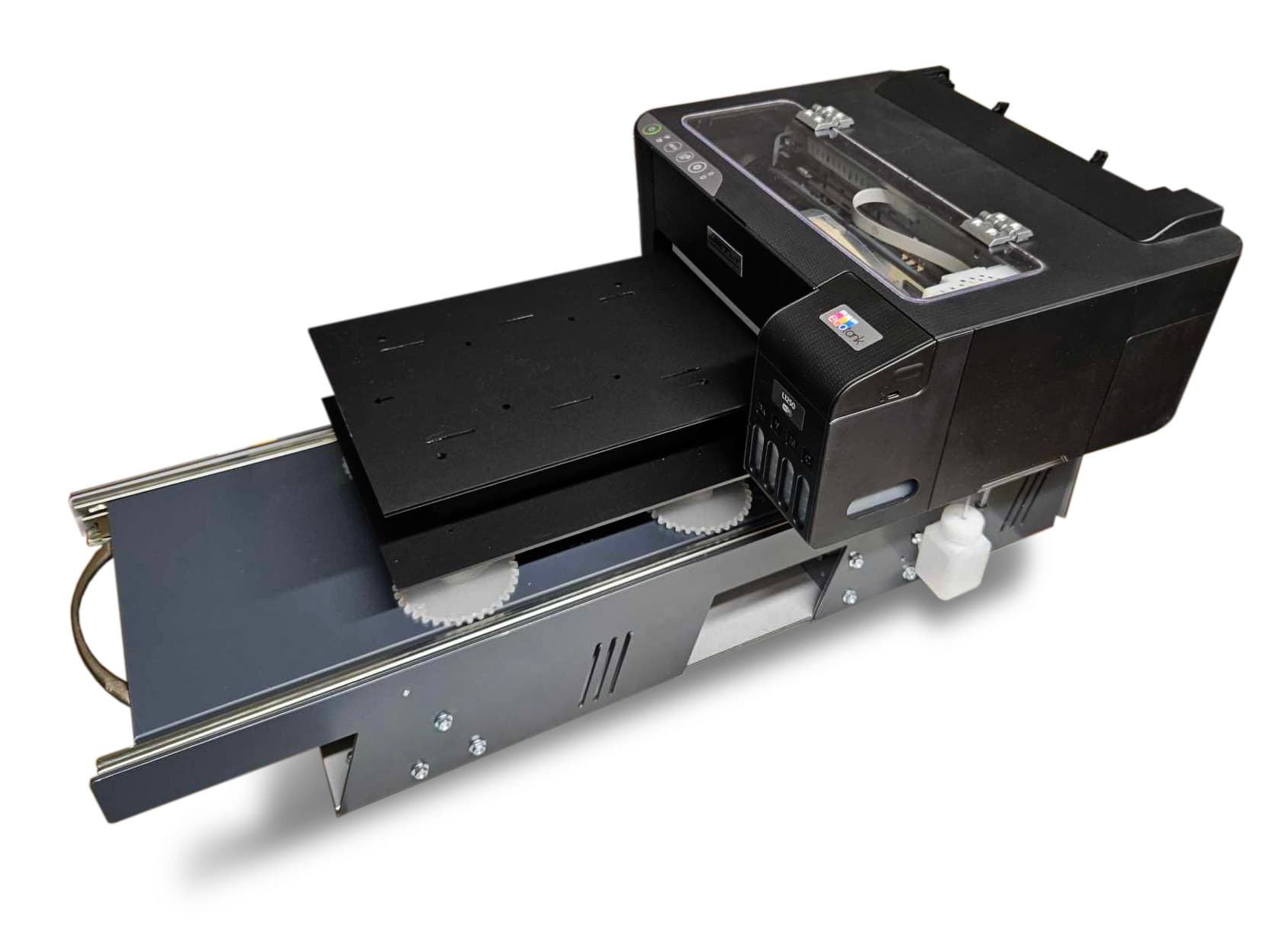
Universal Confectionery Printer
One printer — every confectionery task. The JetLT universal confectionery printer is suitable for printing on cakes, cookies, gingerbread, chocolate, sugar paste and many other products.
View productReady to start printing yourself?
JetLT food printer — from €1,600. 12-month warranty and initial training included.
Blog

Macaron printer: how boutique patisseries personalize a French classic
Macarons are the premium niche where personalization is now the strongest selling argument. This guide explains how a macaron printer reshapes order flow and what to know before buying.
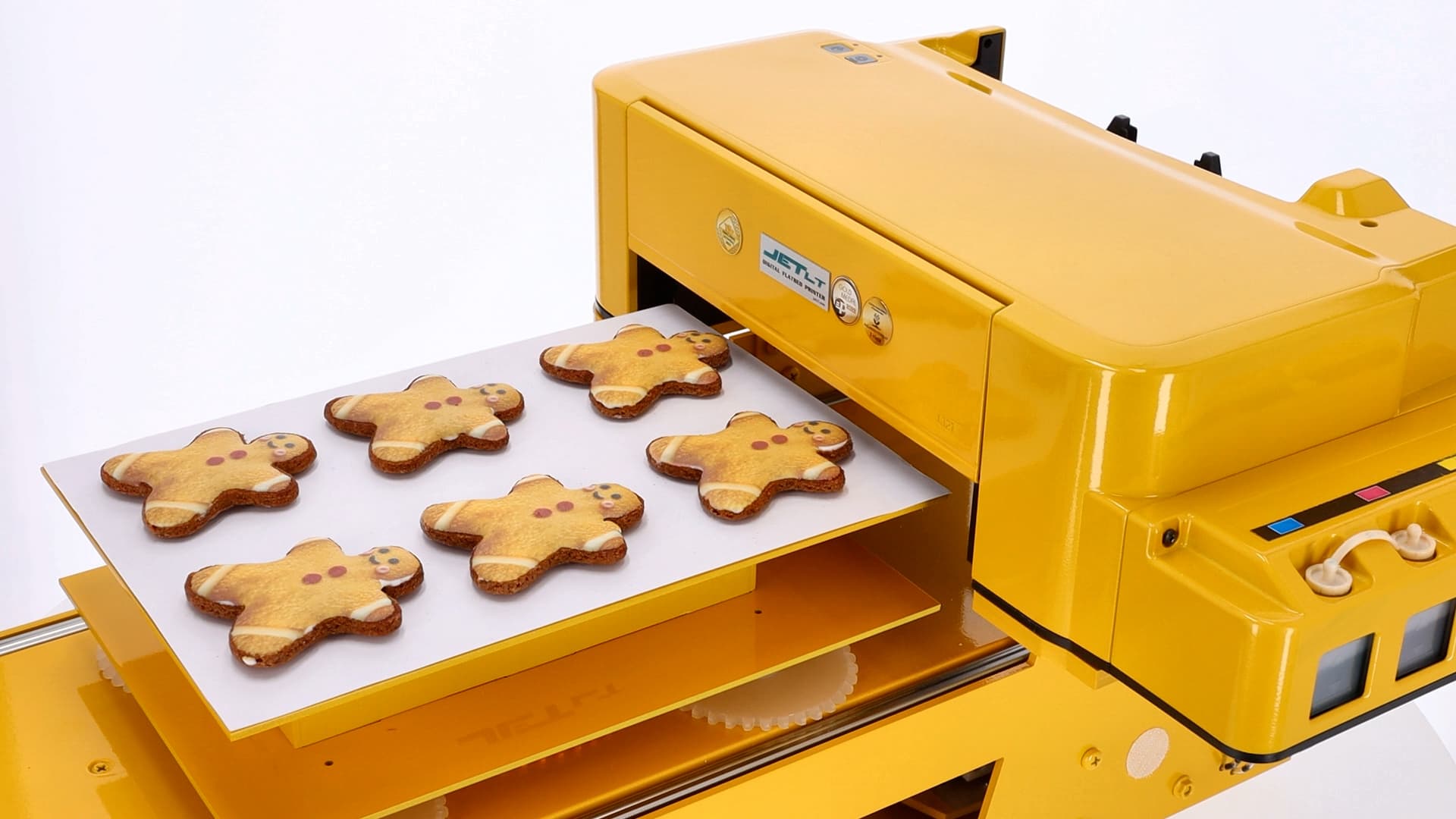
Gingerbread printing, preparing your bakery for the Christmas season
October–November is the right time for bakeries to prepare for Christmas-season orders. Personalized gingerbread with corporate logos, names or holiday motifs is becoming one of the biggest B2B sales categories. An edible inkjet printer lets you handle large batches (200–500 pcs per day) without manual decorator labor cost.