Gingerbread printing — preparing your bakery for the Christmas season
October–November is the right time for bakeries to prepare for Christmas-season orders. Personalized gingerbread with corporate logos, names or holiday motifs is becoming one of the biggest B2B sales categories. An edible inkjet printer lets you handle large batches (200–500 pcs per day) without manual decorator labor cost.
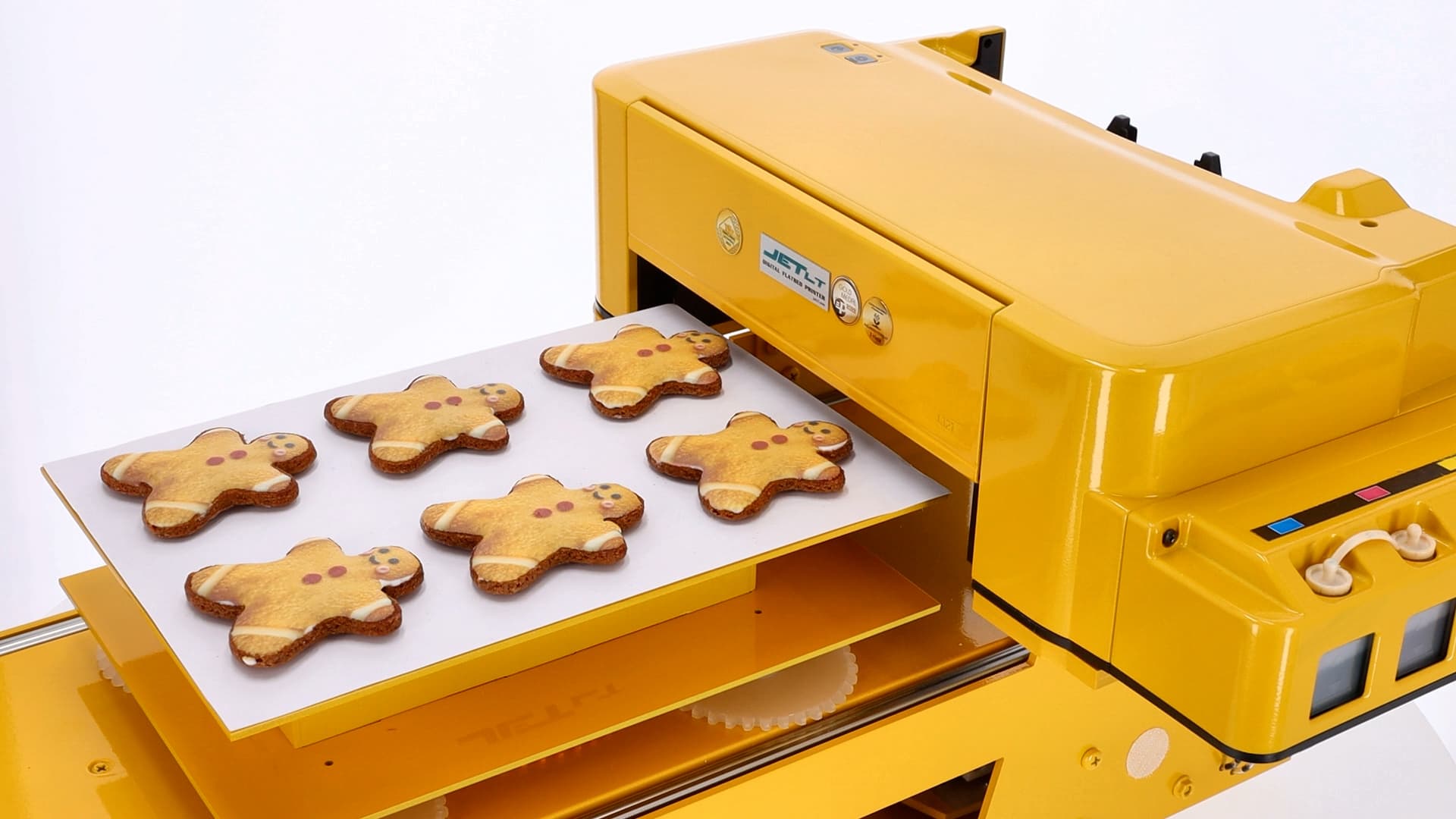
In Lithuania, Poland and all of Central Europe, Christmas-season B2B confectionery sales account for 25–40% of annual turnover. Personalized gingerbread is one of the most in-demand categories — companies order it for their clients, employees and partners. In October–November it is important to prepare your workflow so that during the December peak you can handle large orders without stress.
Why a gingerbread printer is essential for the Christmas season
Manual gingerbread glazing takes 5–15 minutes per unit, depending on detail. A batch of 300 personalized gingerbreads would need 25–75 hours of decorator work — equivalent to €300–900 in wages and, more importantly, a full week of occupancy during December weeks. An edible printer prints one A4-format batch (6–12 gingerbreads depending on size) in 2–5 minutes. A 300-unit batch — 2–3 hours of printing time.
Most common Christmas B2B orders
- Corporate Christmas gifts for clients — company logo plus Merry Christmas text
- Employee swag kits — name plus company brand
- Thank-you gifts for business partners — personalized gingerbread in a gift box
- Events and Christmas parties — guest names or positions
- Retail seasonal assortments — traditional patterns, Christmas illustrations
- Café and restaurant menu additions — themed gingerbread next to hot chocolate
Workflow preparation in October–November
- Select 3–5 standard gingerbread shapes (tree, snowflake, candy cane, star, heart)
- Prepare design templates — the client only submits a logo or text, you prepare the rest in advance
- Set a minimum order quantity — 25–50 pcs (optimal A4 sheet full fill)
- Offer packaging bundles (boxes, cellophane, ribbons) — increases order value by 30–50%
- Promote to your B2B clients — Christmas menus, email, social media in late October
Technical gingerbread printing details
The gingerbread surface must be dry and smooth — glazed gingerbreads print best, as the glaze layer forms a smooth printing surface. Un-glazed gingerbreads (with matte baked dough) also print, but colors will be slightly muted due to surface porosity. Recommended glaze thickness — neither too thin (ink will penetrate into the dough) nor too thick (longer cooling before packing).
Pricing and margins
Market average in Central Europe — €2.50–4.50 for a personalized gingerbread of standard size (10–12 cm). Ink cost — €0.05–0.15, gingerbread cost (ingredients plus baking) — €0.30–0.80, packaging and decoration — €0.40–1.00. Net margin — 50–70%, which competitively beats manual decorators. B2B orders often involve volume discounts — 20–50 pcs standard price, 50–150 pcs –10%, 150+ pcs –15%.
ROI for the Christmas season
Average Christmas-season (November–December) B2B batch order volume — 1,500–3,000 personalized gingerbreads. Average monthly revenue from gingerbread — €4,000–9,000. Bakeries that first invested in an edible printer in September or October often pay it back during a single Christmas season.
Frequently asked questions
What is the maximum number of gingerbreads that can be printed per day? Theoretically up to 500–800 pcs with a standard A4 format printer (12 pcs x 50 sheets x 1 shift). Can you print on glazed gingerbread? Yes — glaze is the ideal printing surface. Does the gingerbread recipe need to be specific? No, any traditional Lithuanian or German-style gingerbread recipe works, as long as the surface is dry and smooth.
Related articles: Cookie printer — how to choose the right model • Food printer for business — 30 day launch plan • How much does a food printer cost
Related products
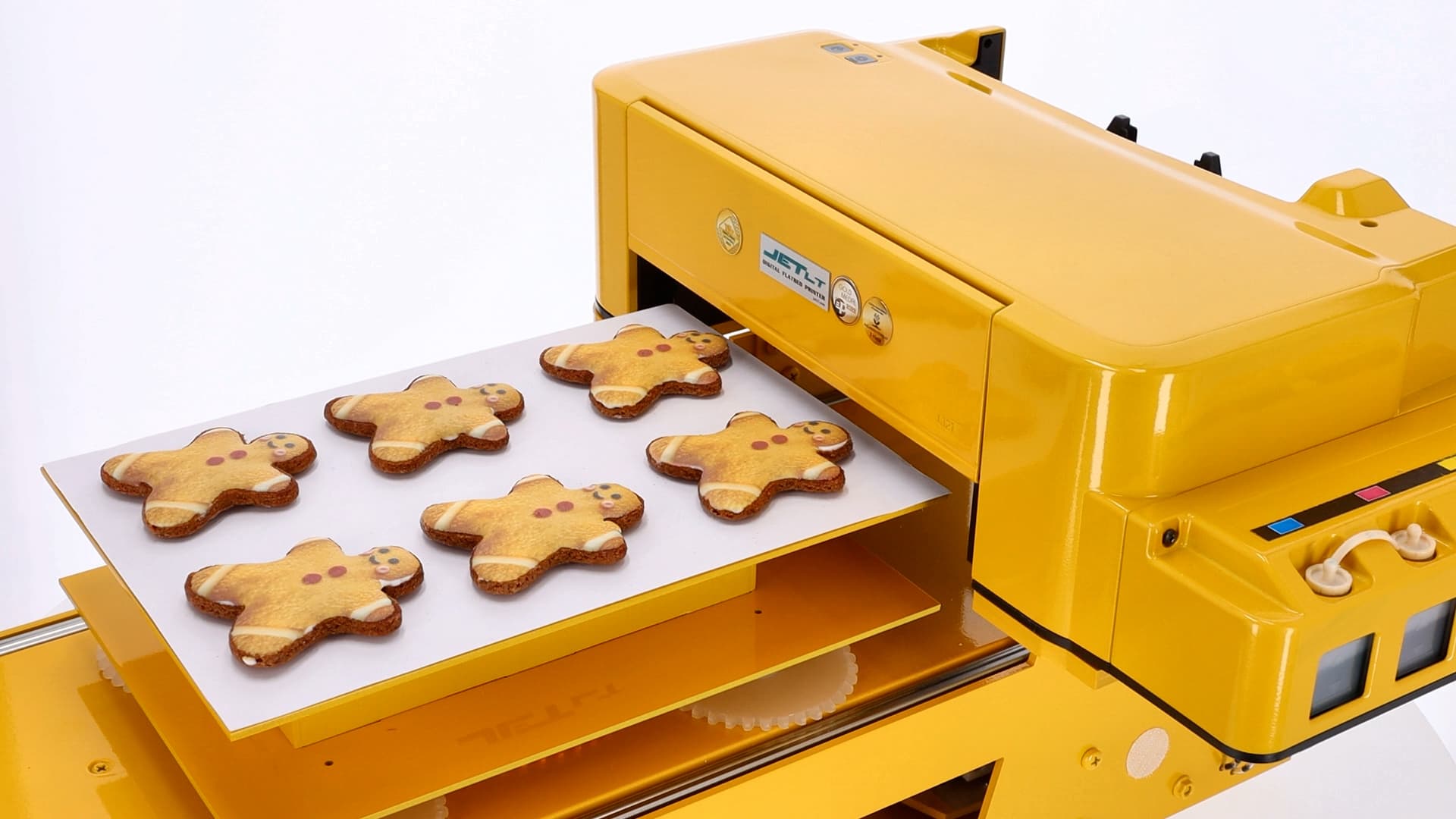
Gingerbread Printer
Create gingerbread that truly impresses — the JetLT printer accurately prints logos, ornaments and photos even on textured, uneven surfaces.
View productReady to start printing yourself?
JetLT food printer — from €1,600. 12-month warranty and initial training included.
Blog
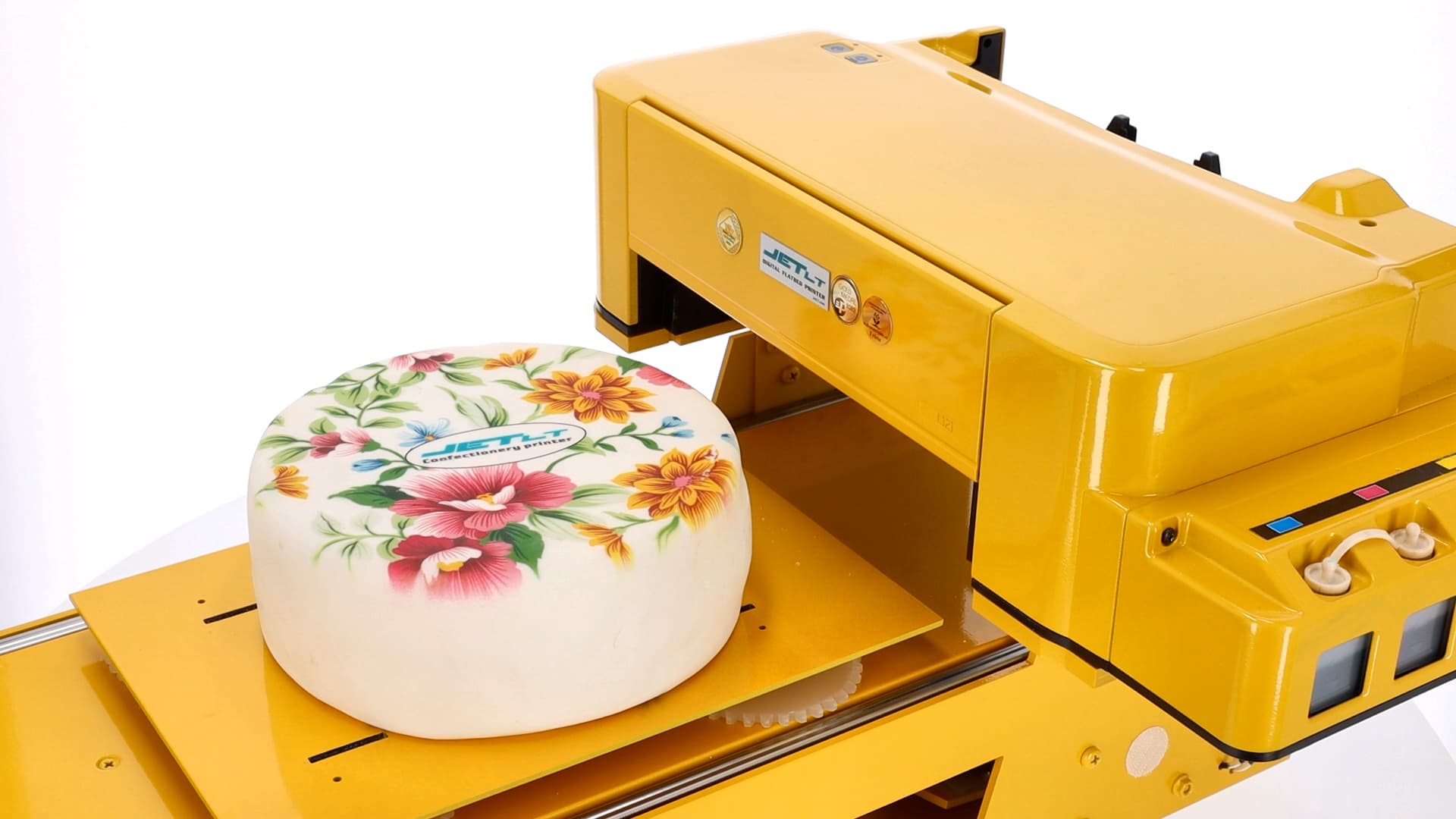
Printing on fondant and sugar paste — professional confectionery decoration guide
Sugar paste and fondant are the universal foundation for confectionery decoration — cake covering, molded elements, personalized plaques. Printing directly on sugar paste replaces hand-painted decoration with automated professional-grade printing that preserves color vividness and high detail.
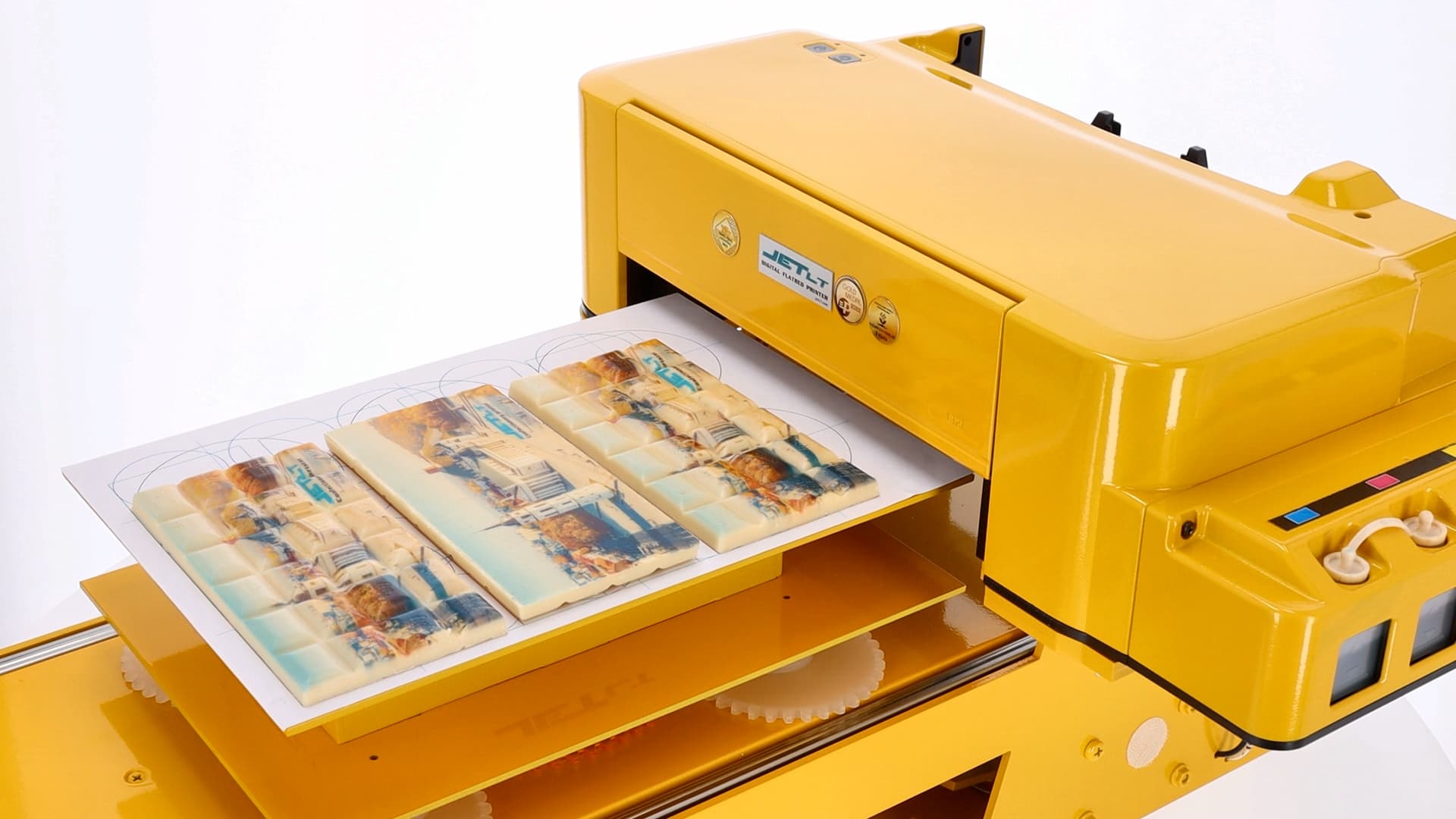
Direct chocolate printing vs. edible transfer sheets — which method fits your bakery
Chocolate personalization is possible in two different ways — printing directly on the tempered chocolate surface, or printing on sugar paper and transferring to the bar. Both methods deliver professional results, but production speed, shelf life, and equipment cost differ significantly.