Edible printouts — technology and applications in confectionery
Edible printouts cover printing on cakes, cookies, chocolate, wafer paper and sugar sheets. We explain how the technology works, its limits, and which food printer model to choose.
The term „edible printouts" (food printing) covers every technology that transfers colour images directly onto food products or edible substrates. In confectionery it most often refers to CMYK inkjet printing with food-grade inks on cakes, cookies, chocolate, wafer paper and sugar sheets. In this guide we explain how the technology works, which surfaces you can print on, and which model of edible printer suits each type of business.
What are edible printouts?
Edible printouts are images applied to an edible surface using EU-certified food-grade inks. Unlike offset printing, food ink is safe for consumption — it consists of edible colourants, water, glycerol and sugar. Common uses include company logos on chocolate bars, birthday photos on cakes, seasonal designs on gingerbread, and individual patterns on macarons.
Which surfaces can you print on?
- Cakes — directly on fondant, marzipan or Italian meringue
- Cookies and macarons — on the icing surface or directly on the dough
- Chocolate — bars, pralines, tempered decorations
- Sugar sheets — an edible film that dissolves on a moist surface
- Wafer paper — a thinner substrate for cakes with a dry surface
- Gingerbread — freshly baked or glazed
- Coffee and milk foam — printing on latte and cappuccino
How does an edible printer work?
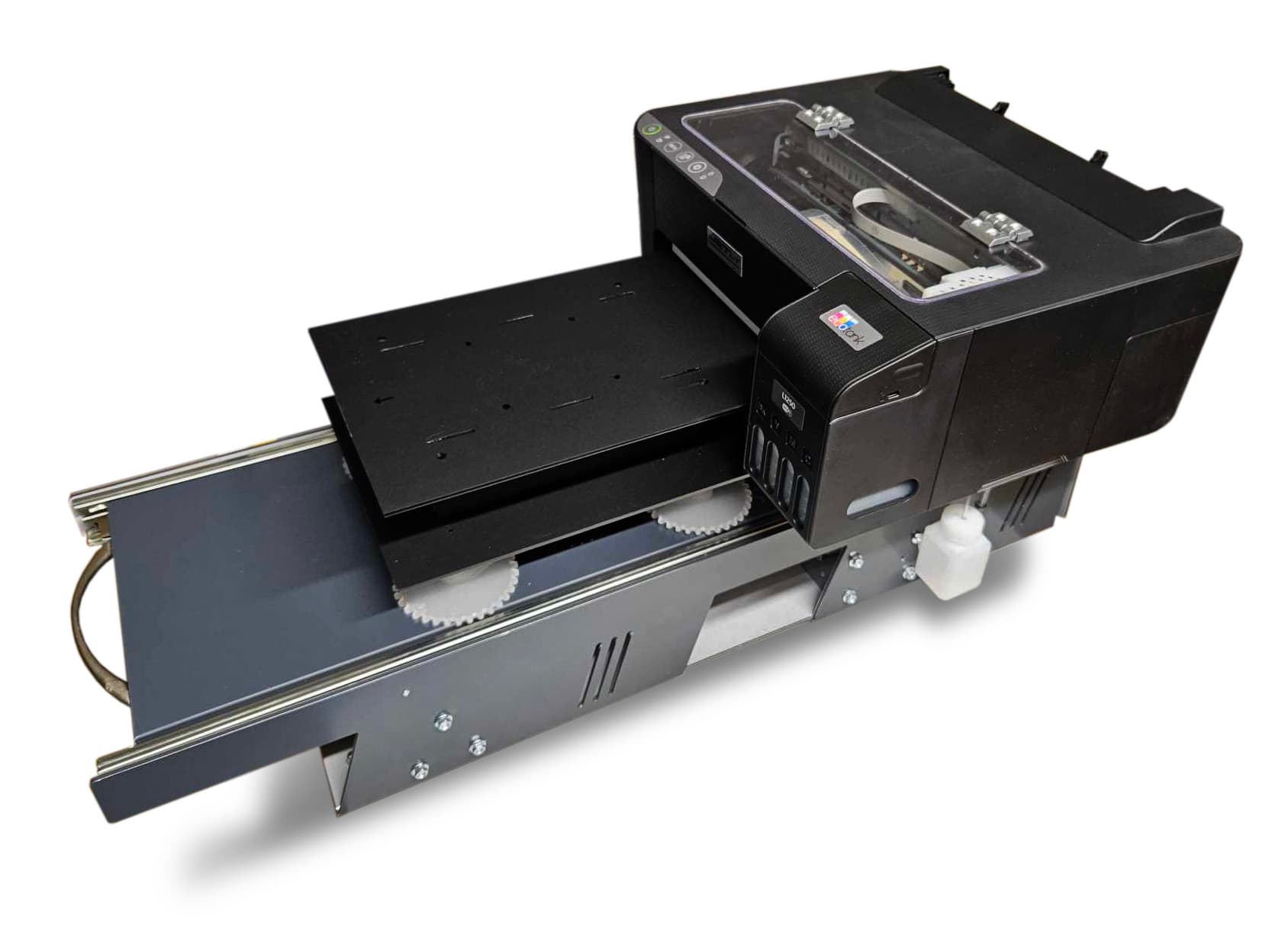
An edible printer is a modified Epson EcoTank inkjet in which classic inks are replaced with EU-certified food-grade CMYK inks. The paper tray is replaced with an adjustable platform that accommodates products up to 150 mm high. The print head does not touch the surface — ink is sprayed contactlessly from a few millimetres away, so you can print even on delicate mousse, macarons or freshly tempered chocolate. Print resolution from 720×720 to 5760×1440 dpi delivers photographic image quality.
Safety and certifications
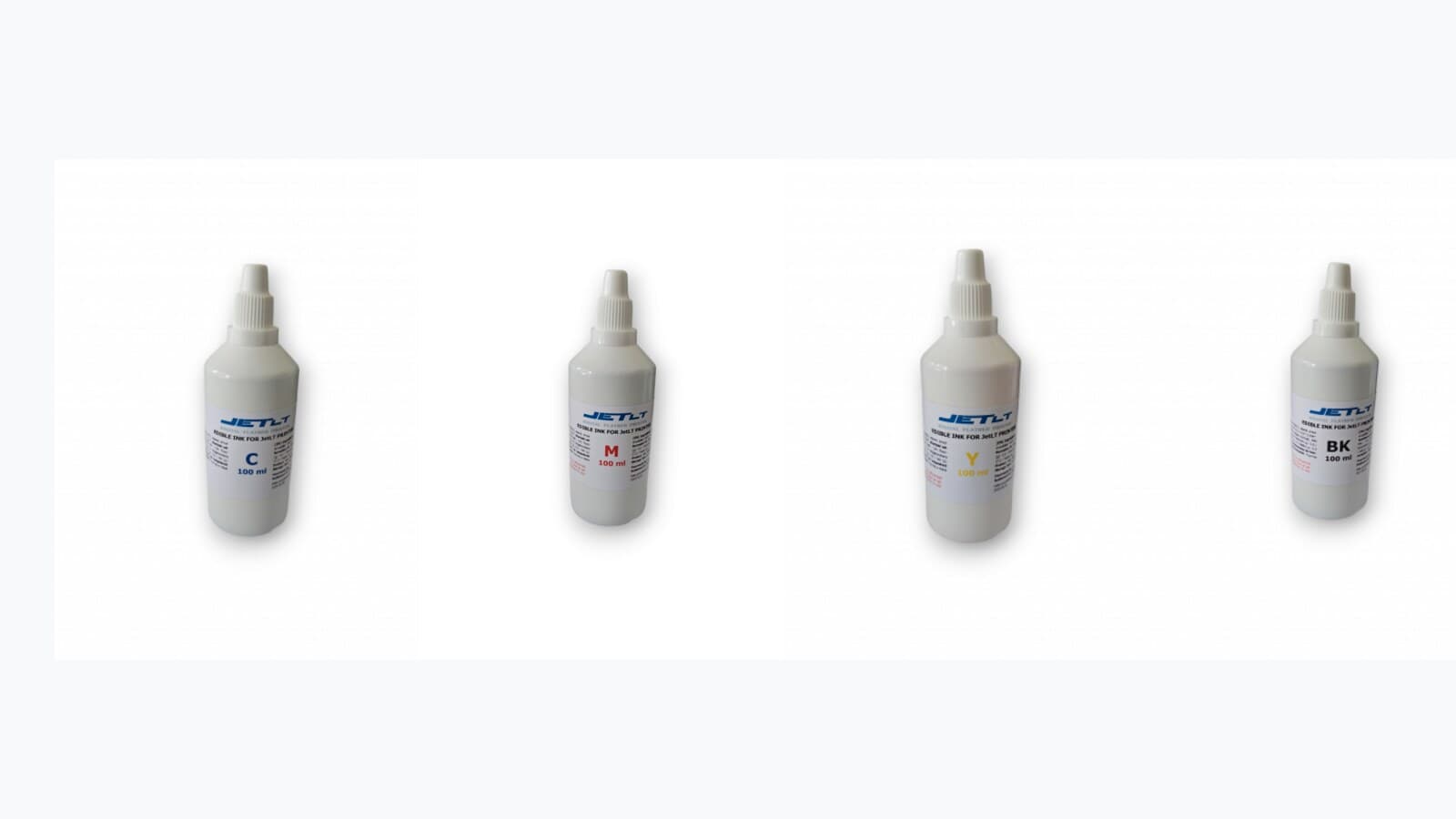
JetLT food-grade inks are produced in the European Union and hold all the required certifications (HACCP, ISO 22000, national food-safety registration). The base is food-grade glycerol, distilled water and food-approved colourants. A 100 ml bottle costs around 15 euro and lasts for several hundred A4 prints, depending on coverage.
Typical business use cases
- Bakeries — personalised birthday and wedding cakes (40–60% margin)
- Chocolate workshops — B2B bars with company logos (conference gifts)
- Pastry shops — seasonal gingerbread and holiday decorations
- Cafes — latte art with customer logos or photos
- Event agencies — edible business cards, menus, tasting cards
- Packaging producers — printing directly on food-grade paper
Which model of edible printer to choose?
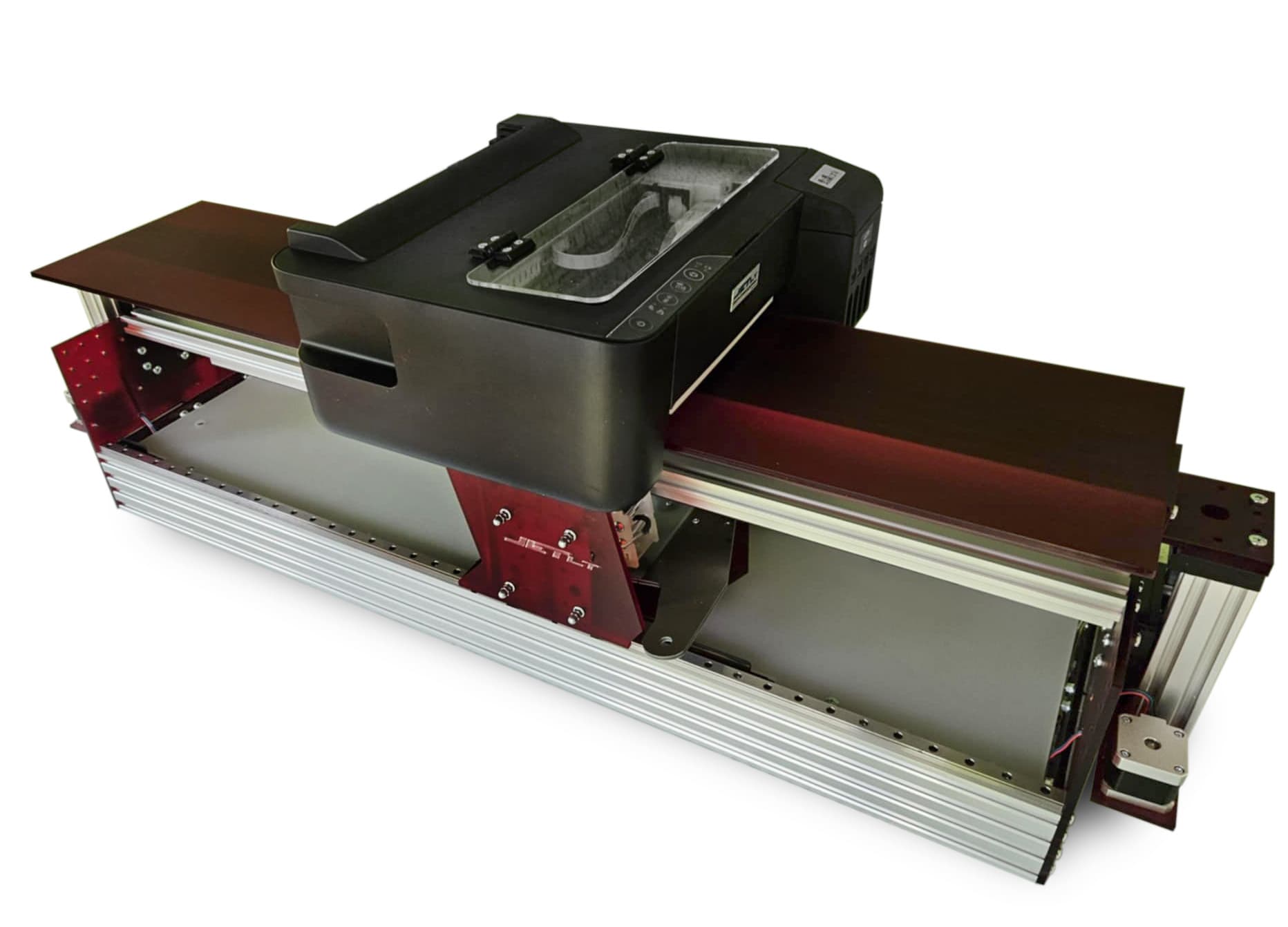
The choice depends on specialisation. If a business focuses on one type of product — for example only chocolate — a dedicated model is cheaper and simpler to operate. A universal confectionery printer covers every type of surface and is recommended for businesses aiming to offer a broad personalisation portfolio.
How much do edible printouts cost?
The JetLT edible printer starts at 1800 euro net (dedicated model); the universal model costs around 2200 euro. Cost per A4 print is 0.15–0.30 euro depending on coverage. In practice, the margin on a personalised cake or chocolate bar recovers the equipment cost within 4–8 months at an average volume of 30–50 prints per day.
Frequently asked questions
Do edible printouts have a taste? No — food-grade inks are flavour- and odour-neutral, so they do not change the culinary experience. Can you print on greasy surfaces? Yes, but a thin layer of fondant or icing is recommended to ensure stable ink adhesion. How long does the print last? On dry surfaces (chocolate, gingerbread) — up to several months; on creams and cakes — up to 24 hours without loss of quality.
Related articles: Food printer — complete 2026 guide • Edible inks — are they safe • Printing on wafer paper and sugar sheets
Related products
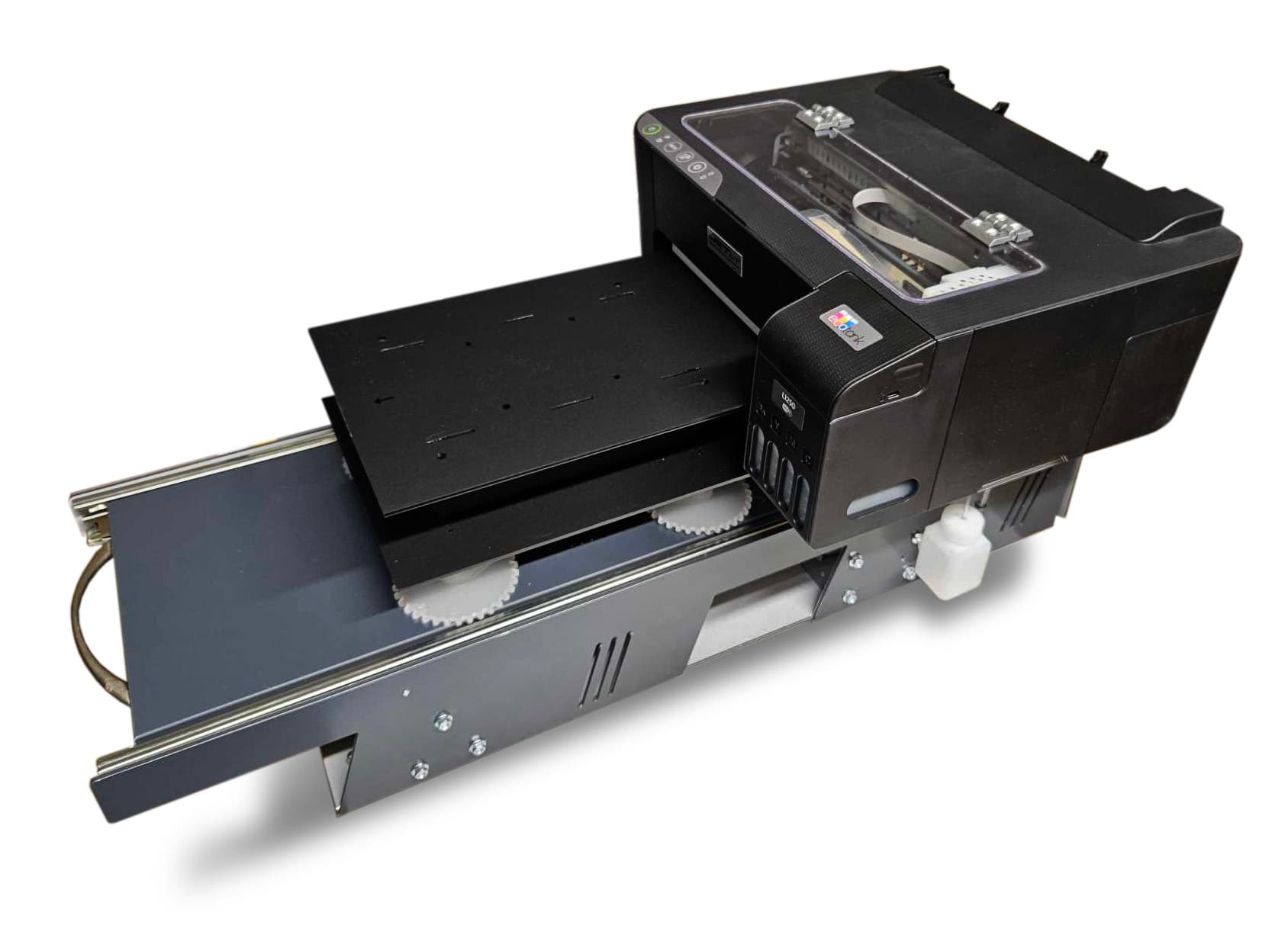
Universal Confectionery Printer
One printer — every confectionery task. The JetLT universal confectionery printer is suitable for printing on cakes, cookies, gingerbread, chocolate, sugar paste and many other products.
View productReady to start printing yourself?
JetLT food printer — from €1,600. 12-month warranty and initial training included.
Blog
Sugar sheets vs wafer paper — which to choose for your bakery?
Sugar sheets and wafer paper are the two most common edible print substrates, but their properties differ. We compare them for cakes, cookies, chocolate and storage.
Confectionery printer vs food printer — is it the same device?
„Confectionery printer" and „food printer" — both terms surface side by side in Google. Are they synonyms? When should you use which? We clarify the terminology and help you choose the right model.