Sugar sheets vs wafer paper — which to choose for your bakery?
Sugar sheets and wafer paper are the two most common edible print substrates, but their properties differ. We compare them for cakes, cookies, chocolate and storage.
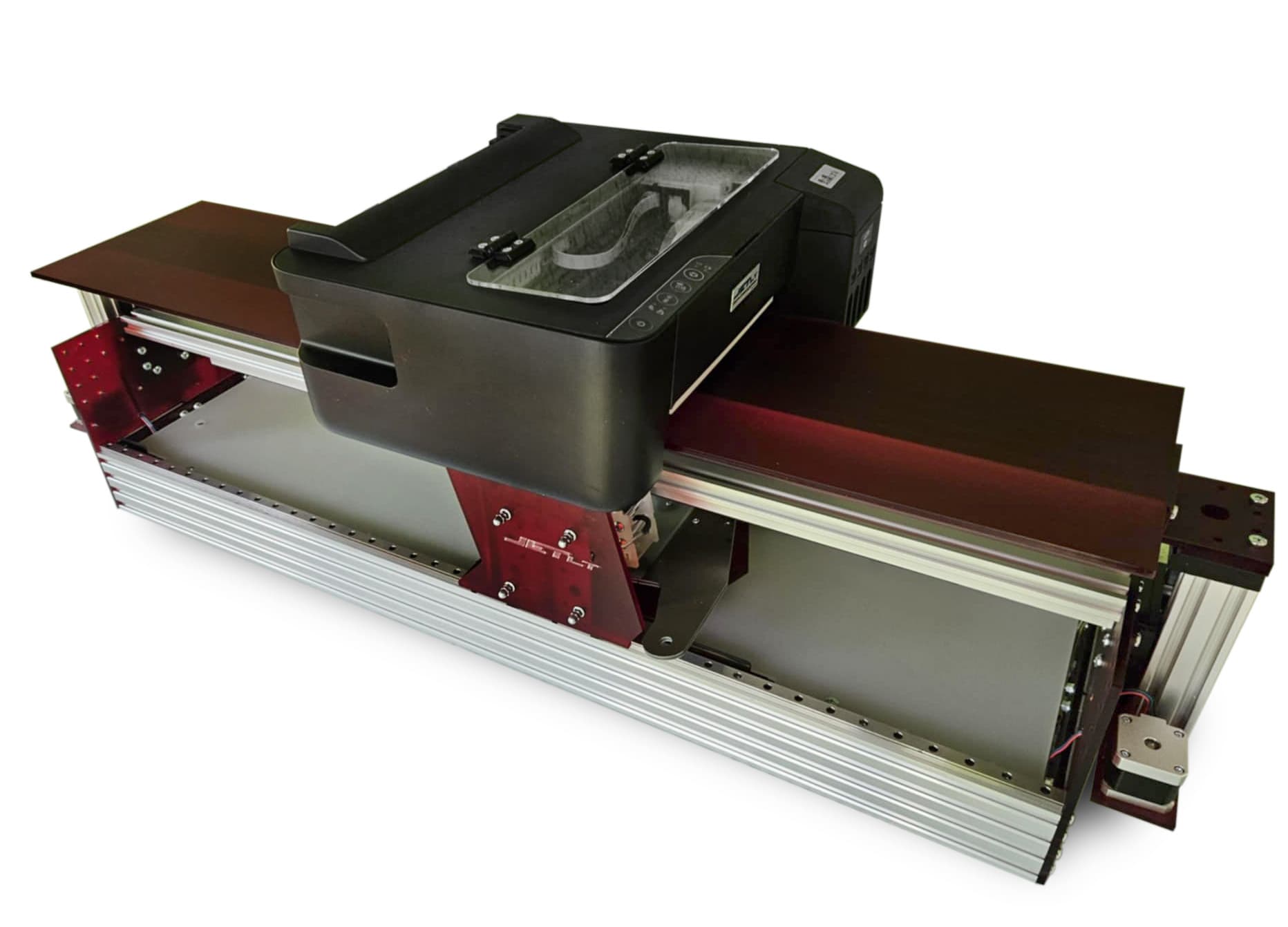
In confectionery, when you want to transfer a photo or logo onto a food product, you have two main edible substrate options: sugar sheets (icing sheets) and wafer paper. Both look similar — thin white A4 sheets — but their properties, how they behave on the product, and their price differ significantly. In this article we compare both and help you choose the right one for each specific use case.
How do sugar sheets and wafer paper differ?
Sugar sheets are a flexible edible film made from sugar syrup, potato starch and glycerol. The surface is smooth, suited for high-resolution print, and dissolves on a moist base (cream, fondant, icing). Wafer paper, on the other hand, is produced from potato flour and water — it is thinner, stiffer, has a matte structure and keeps its form on dry surfaces (chocolate, gingerbread, caramel).
When to choose sugar sheets?
- Fondant-covered cakes — the image dissolves and becomes part of the surface
- Rich creams (buttercream, whipped cream) — the paper vanishes after wetting, leaving the colour photo
- Large areas (30 × 40 cm) — sheets come in larger formats and can be cut
- Photorealistic images — the smooth surface gives better colour reproduction
- Moist cupcakes and muffins — the surface absorbs the film well
When to choose wafer paper?
- Chocolate bars — keeps its form, does not dissolve
- Gingerbread — works on a dry, textured surface
- Caramel, isomalt, pressed sugar — does not react with dry sugars
- 3D decorations — stiffness allows petals, butterflies, standing elements
- Foamed drinks (latte) — foam moistens the paper, image stays on the surface
How to print on each?
Both materials print in the same food printer with certified CMYK inks. Sugar sheets require dry hands during handling (moisture causes waving), and after printing you should wait 15–20 minutes for the ink to dry. Wafer paper is more finger-moisture resistant but brittle — it cracks easily when bent. In both cases the print takes 2–5 minutes per A4 sheet, depending on coverage and chosen resolution.
Price and storage
Sugar sheets are pricier — an A4 sheet costs 0.60–0.90 euro. Wafer paper is around 0.30–0.50 euro per sheet. Both materials should be stored in a dry, sealed package at room temperature. Sugar sheets keep their properties for 12 months, wafer paper for 18–24 months if the package stays sealed. Do not store either in the fridge — condensation destroys the structure.
Which one for my business?
- Bakery with wedding/birthday cakes — sugar sheets (photorealistic look)
- Chocolate workshop (bars, pralines B2B) — wafer paper
- Pastry shop with seasonal gingerbread — wafer paper
- Rental business (cakes + chocolate + events) — both materials, universal printer
- Cafe with latte art — wafer paper (foam-resistant)
Frequently asked questions
Do sugar sheets and wafer paper have taste? Sugar sheets are slightly sweet (sugar base), wafer paper is neutral. In both cases the taste is barely detectable and does not affect the culinary experience. Can you print on both in the same printer? Yes — modern food printers handle both materials without changing settings. How long does the print last? Sugar sheet on cream — up to 48 hours without quality loss. Wafer paper on chocolate — up to several months.
Related articles: Printing on wafer paper and sugar sheets • Edible printouts — technology and applications • Edible inks — are they safe
Related products
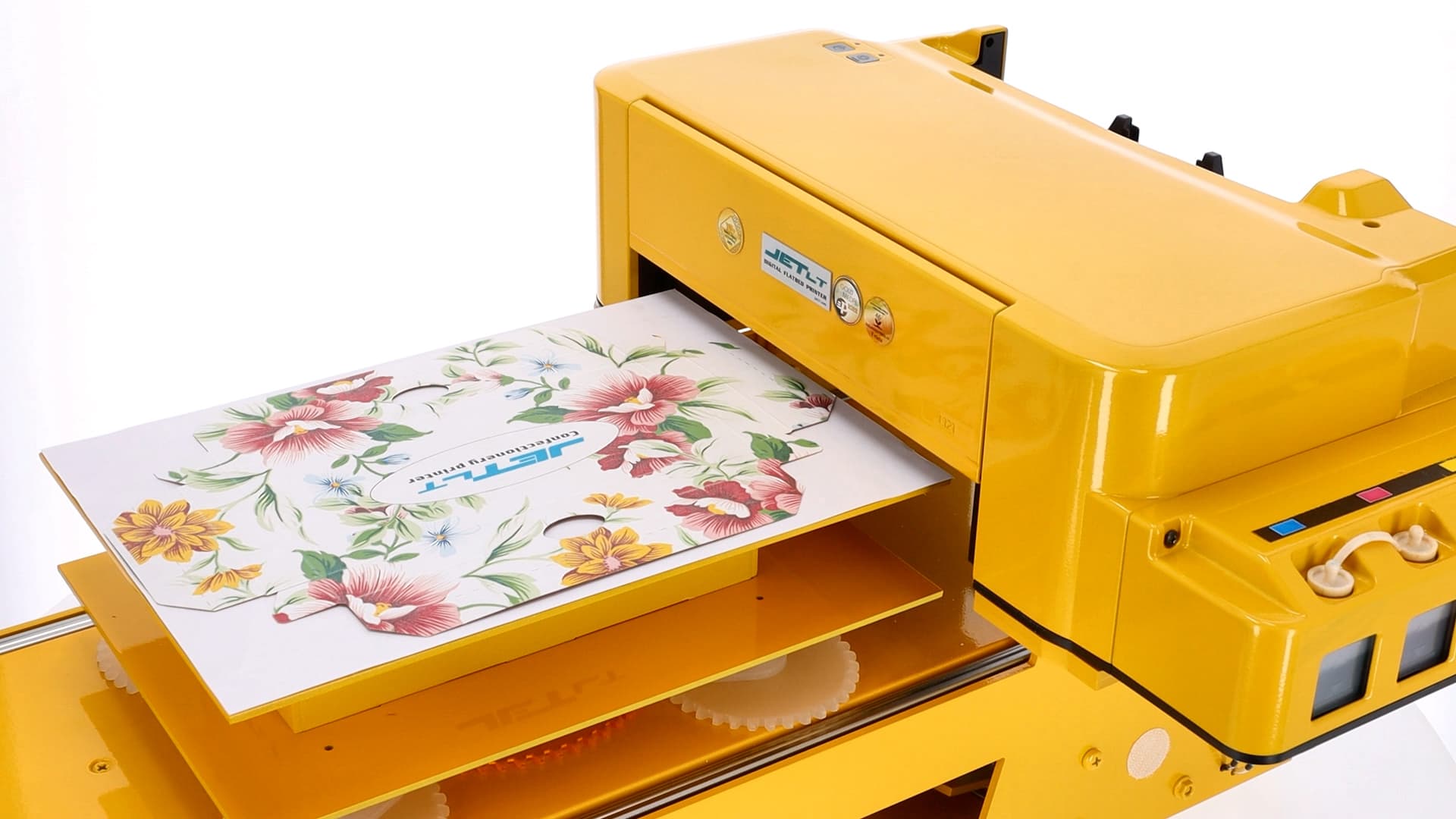
Sugar Paste Printer
Professional food printer for direct printing on sugar paste, fondant toppers, sugar paper, sugar glaze and other confectionery products.
View productReady to start printing yourself?
JetLT food printer — from €1,600. 12-month warranty and initial training included.
Blog
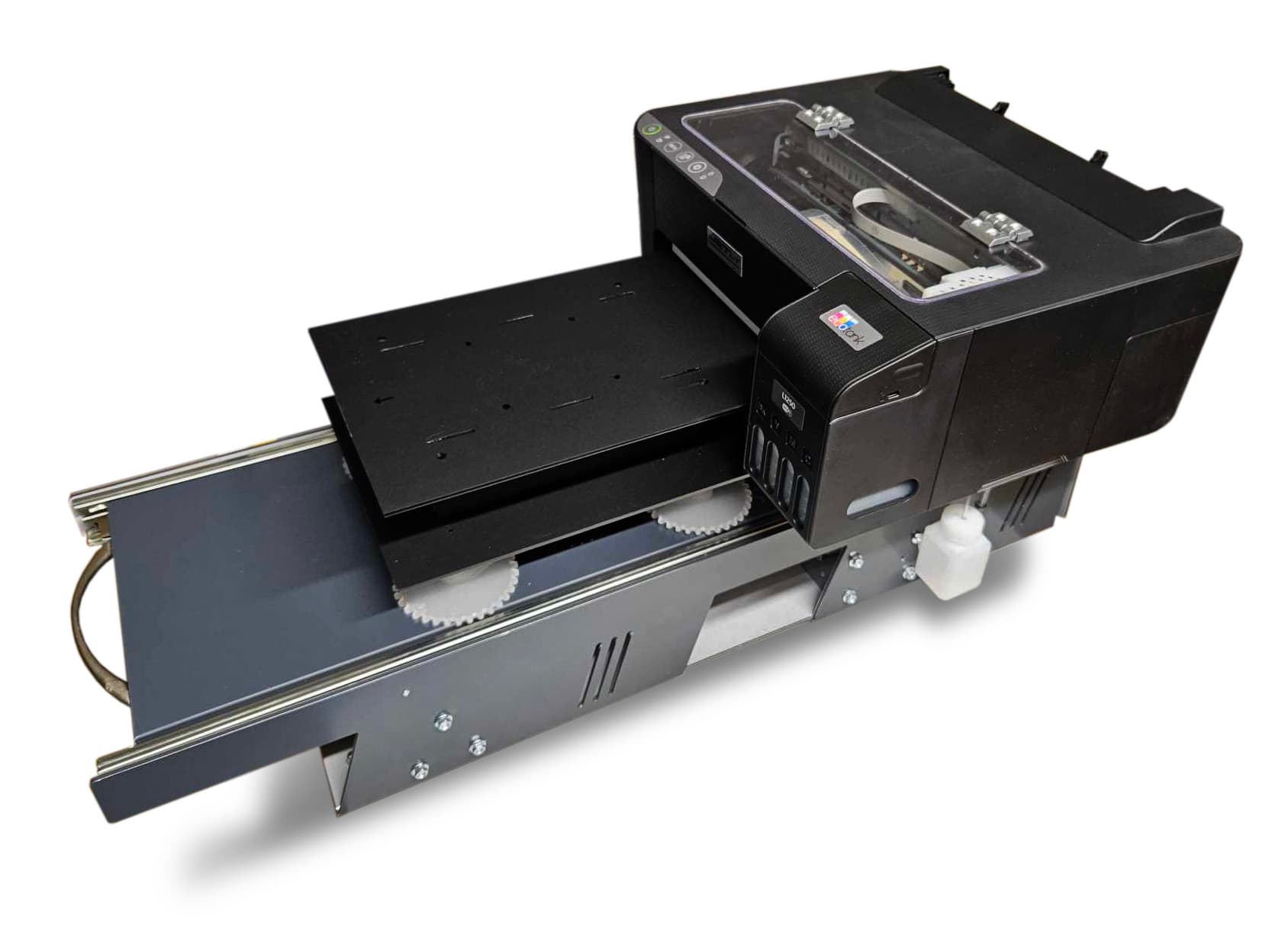
Confectionery printer vs food printer — is it the same device?
„Confectionery printer" and „food printer" — both terms surface side by side in Google. Are they synonyms? When should you use which? We clarify the terminology and help you choose the right model.
Edible printouts — technology and applications in confectionery
Edible printouts cover printing on cakes, cookies, chocolate, wafer paper and sugar sheets. We explain how the technology works, its limits, and which food printer model to choose.